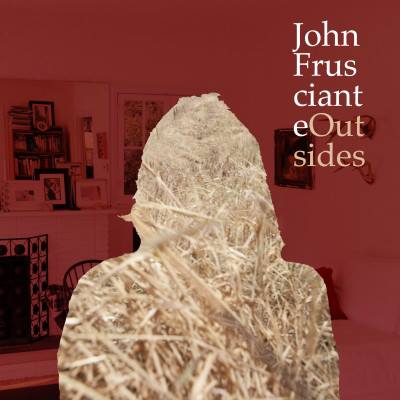
2013. augusztus 27-én (Japánban augusztus 14.) jelenik meg John Frusciante új kislemeze, Outsides címmel. John elég bőven ír a lemezről, illetve a japán kiadás bónusz száma már le is tölthető, meghallgatható.
For more information about Outsides, see below from John:
Outsides consists of a 10 minute guitar solo and 2 abstract “out” pieces of music. Here I use the word out in the same sense as the term was used in free jazz. It’s a modern approach to the concepts of harmony found in some late 50s/early 60s free jazz and some 20th century classical. I don’t employ any aspects of rock or pop harmony, and that was basically the approach, just to make music that is not reliant on the center that, on PBX, was provided by my songwriting style. I consider this to be working along abstract lines. Making forward moving, full sounding music without resorting to any familiar musical relationships of harmony to serve as a basis has been a goal of mine for quite a while. Both songs have my style of drums and guitar solos, but nevertheless I think of them as my version of modern classical music. They started as just orchestra, but I go wherever music takes me, and I use any instrument to express my feelings, just as I use aspects of any style. For instance, on Shelf, despite the unconventional tonality of the section, I was surprised to find that a blues guitar solo worked well. Also, both songs have Acid sections.
The 1st song, on the other hand, is a new approach to the form of the extended solo. The effect is that of an improvisation between the drums and guitar, but these specific interactions between those instruments could not take place with a traditional drummer and lead guitarist. It’s basically my dream drummer, because he listens and responds to what I am playing, yet he also provides a solid anchor for me to respond to, without the usual delays involved in those contrary actions. He also gives me large spaces of silence and then comes back in exactly on one of my accents, as if he knew I was going to play a note in that precise place. This impossible interaction is due to the fact that the guitar solo was performed to a repetitive 2 bar version of the drum beat, and then afterwards I chopped up the drums so they are interacting with and responding to the solo for the entire 10 minutes. I used only one break for the entire song, trying to get the most I could out of it. Amazing how many new beats there are to be found in a one bar break. This work method allowed me to polyrhythmically go way out on a limb with the guitar, while drum-wise remaining as tight as a funk drummer who somehow mentally follows and compliments each polyrhythm perfectly. Funk drummers normally lead their band, while busy drummers supporting polyrhythmic soloists must listen to and be guided by the soloist, and yet in this song, the drummer is doing both of those things at every moment.
Also, the other instruments are changing by the section and normally extended solos do not have sections so to speak. I maintain a consciousness of the 16 bar cycles, whereas rock soloists and their bands generally abandon multiples of 8 bars, and lose sight of the big picture, hence the boredom long solos became known for. In other words, a guy’s normally soloing over maybe a two bar vamp, and everybody naturally continues to hear larger frames, but gradually these frames become different for each person hearing the music. This not only disconnects the audience from the band, but also disconnects the band members from each other. This is the opposite effect that rock music generally strives to achieve. Whereas, this solo moves forward and changes constantly, like a song does, and the guitar must change keys with the music in the same way a singer must. In extended solos, guitarists usually avoid this inconvenience by soloing over reliable musical backgrounds, called vamps, or by soloing over chord progressions in which the chords all draw from the same 7 notes. When presented with a progression like this, most guitarists would make up a melody, or compose a basic game plan for a solo. You just don’t hear people improvising a long, ballistic solo like this over this kind of classical/Tony Banks chord progression. This ability comes partially from the fact that when I practice along with a CD, I will play one part, say the keyboard, while thinking about at least one other part, say the bass, and my eye follows the frets where the bass part would be if I were playing it. If I fail to “see” the bass part for a few notes, I rewind and do it again until I am playing the keyboard part and seeing the bass part. I’ll do this with all the instruments until my brain understands all the inherent relationships of pitch and rhythm, and by doing this I have as good a mental idea as I could muster about “why” that piece of music makes me feel how it does. Short guitar solos over modulating changes are particularly illuminating using this practicing method. If a musician plays the chords while seeing the solo, and then plays the solo while seeing the chords, it becomes clear “why” the guitarist chose those particular notes at the times he did. This form of practice is based on the same basic musical principle which Jimi Hendrix’s rhythm guitar style showed us, which is that you could be thinking of the chords and a lead part at the same time. We guitar players previously understood this principle as “I can play chords and a lead at the same time”, but at this point in time, over 40 years later, we can now appreciate that it is the ability to think of chords and a lead at the same time which caused him to play in this style, and a new type of soloing can result from engaging in this same mental action, but only playing the lead part. Allan Holdsworth has always been great at this, but we are not talking about jazz here. Rock guitarists usually do not wish to think trains of thought about anything but their own guitar playing during a long solo, and I could not play this way if I were not able to divide my attention between my ever changing musical environment and my instrument itself. To lose your mind while you are mentally considering two opposing perceptions of the music at hand, is a skill rock musicians as a whole have yet to develop.
The style I’m playing in is basically the way I play on PBX, but by this point I had gotten to playing that way with total reckless abandon. This was more of a mental development than a physical one. The difficulty in playing in this style is to think of two separate melodies, in two different ranges, at the same time, and execute them on alternate steps so that they both occur as a single melodic passage. This principle humbly began with some of the lead work Robert Fripp did in the 1970s, and was developed much further by people programming 303s and 202s in the 80s, 90s, and 2000s.
Throughout the last few minutes of the solo, the guitar is being treated by my modular synthesizer and its 64 step sequencer, receiving many triggers from a modded 606 drum machine, and again, it’s a real pleasure to add to an improvisation with musical actions which are right in line with the thinking of the soloist. In this case, it’s me going off on the sound of my guitar with the same abandon as I played the instrument with.
Rock music is electronic music, dependent entirely on electronic circuitry and amplification. This song gives new life to the long ago popularly discarded form of the extended rock guitar solo, and is also progressive synth pop, just the same. The Ep is 20 minutes long.
-John